Road Washing Trucks
Electric Vacuum and Washing Sweeper Truck
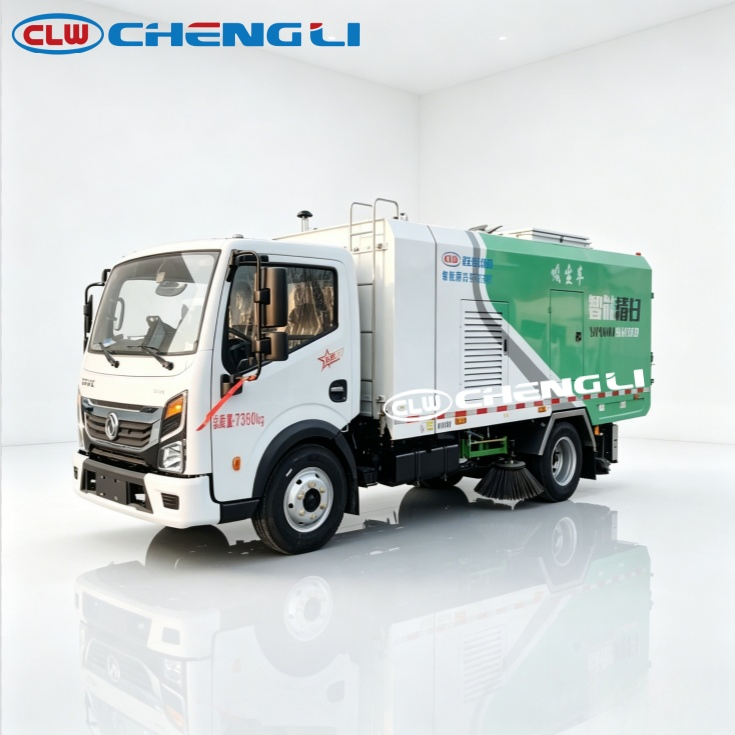
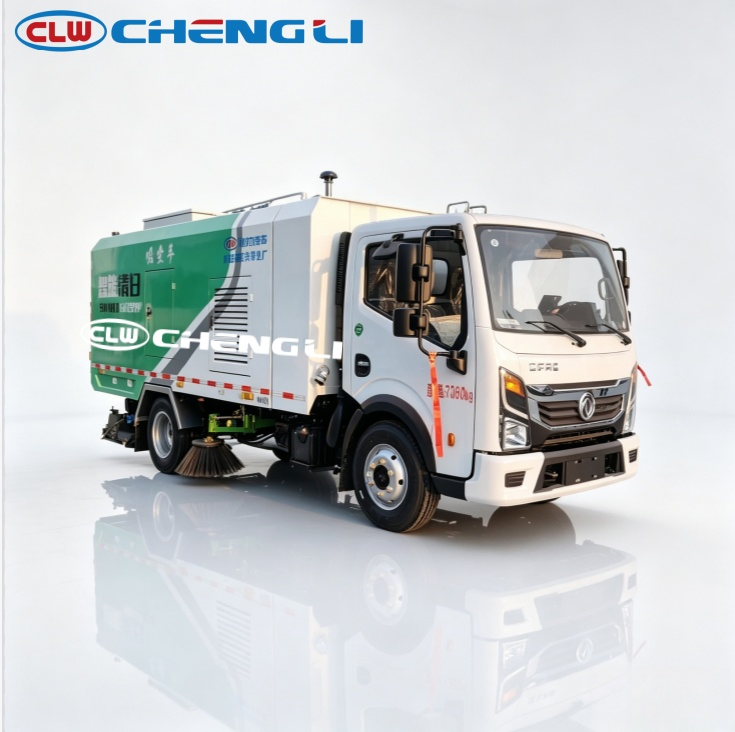
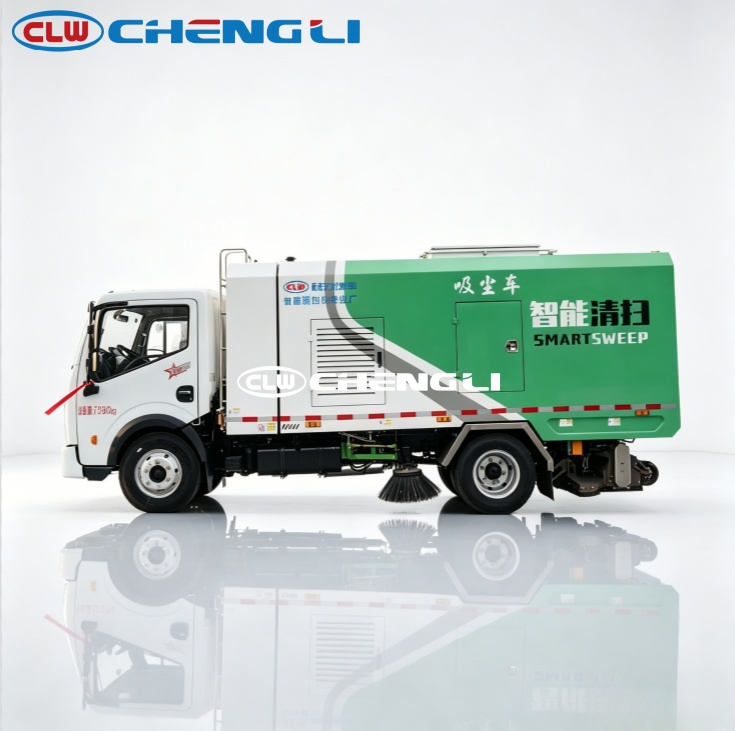
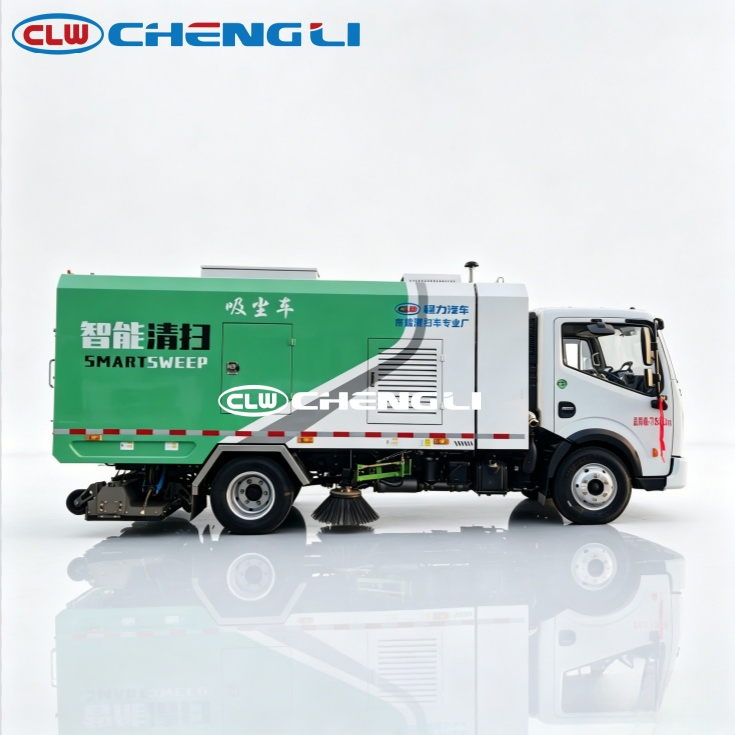
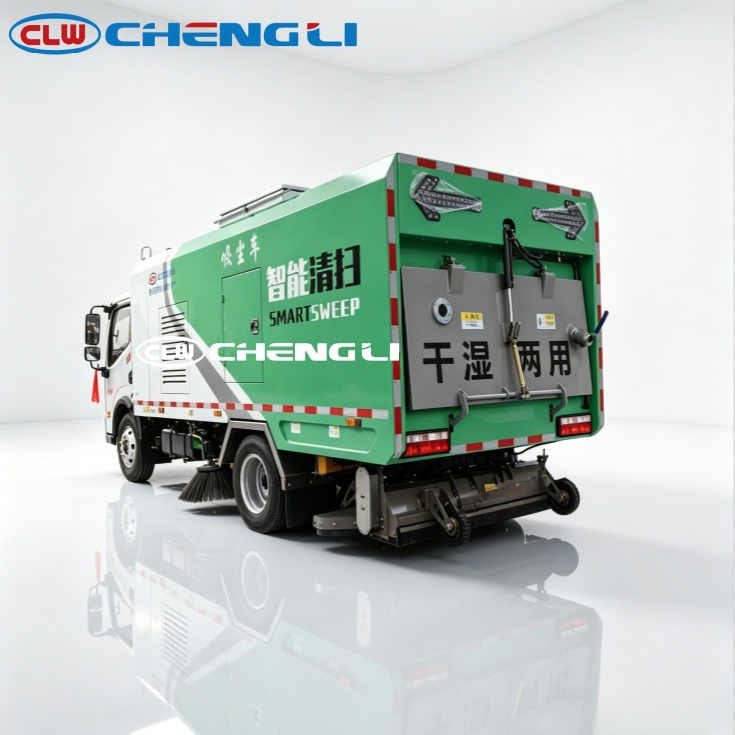
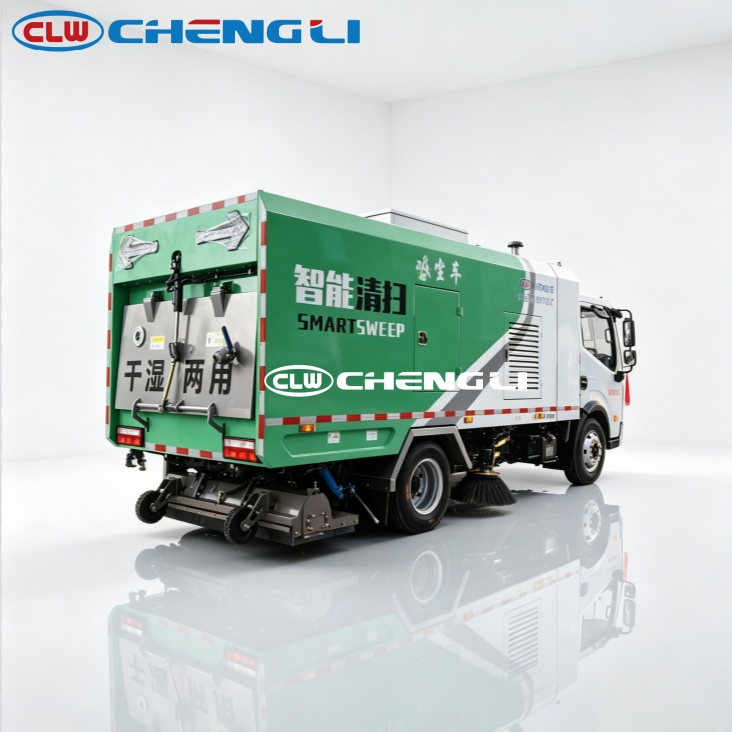
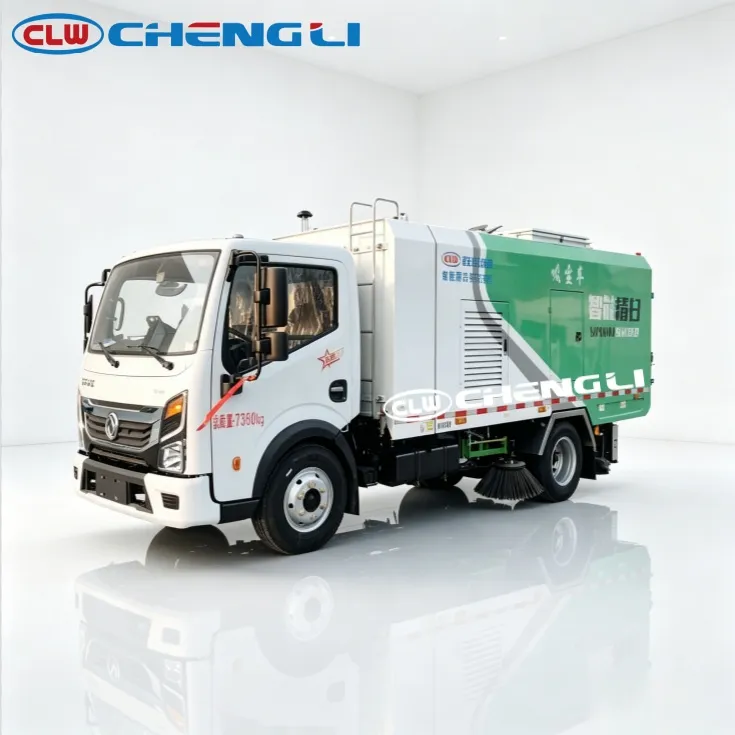
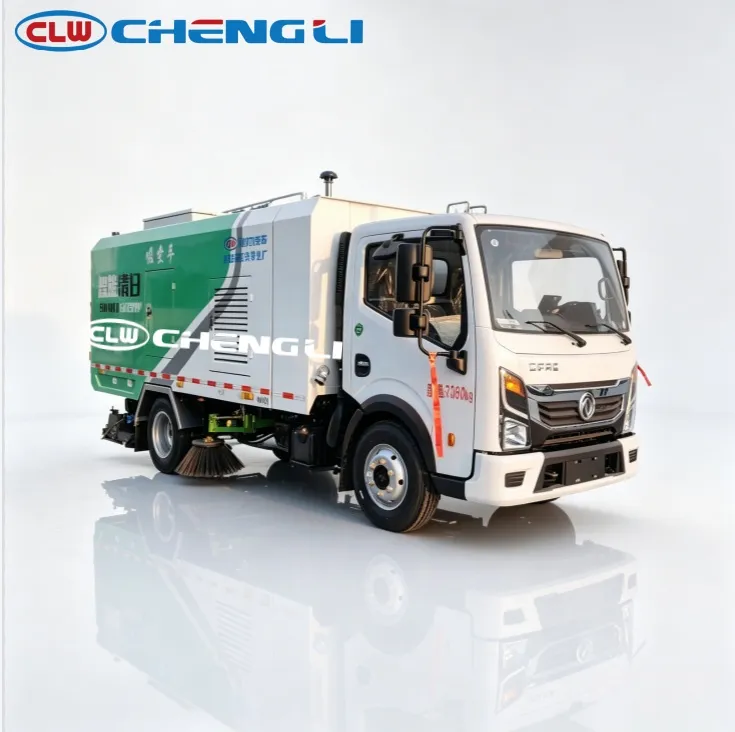
A compact battery-electric washing sweeper integrating twin-disc sweeping, vacuum recovery and high-pressure road washing. It is intended for hard-surface municipal routes where one-pass dirt removal, wastewater recovery and low local emissions are operational priorities.
Product gallery
Technical specifications
| Water / debris capacity | 1.6 m3 water + 3.7 m3 bin |
|---|---|
| Drive layout | 4x2 platform |
| Fuel type | Electric |
| Battery capacity | 110 kWh |
| Wheelbase | 3,308 mm |
| GVW | 7,360 kg |
| Rated payload | 1,180 kg indicative |
| Overall dimensions | 6,280 x 2,050 x 2,680 mm |
| Maximum speed | 87-89 km/h source range |
| Tank material | Q235 carbon steel, indicative |
| Working speed | 3-20 km/h |
| Working width | 3,500 mm |
| Disc-brush projection | At least 400 mm |
This electric washing sweeper brings sweeping, washing and recovery into one route vehicle. The final duty plan should account for surface conditions, charging access and the water and debris handling cycle.
Core capabilities
One-pass cleaning
Sweeping, washing and vacuum recovery operate as an integrated process.
High-pressure washing
Specification description lists 10-13 MPa for stubborn road dirt.
Wastewater recovery
Suction collects slurry to reduce residue on the cleaned surface.
Applications and operating fit
Sweeping, washing and wastewater recovery
Suitable conditions
- Asphalt and concrete streets
- Commercial districts
- Transport hubs
- Industrial parks and parking areas
Conditions requiring a different specification
- Unpaved roads
- Large demolition debris
- Flood-water pumping
- Routes without charging and water support
Chassis and configuration
Battery electric
Configuration choices
- Battery size, duty cycle, air conditioning, washing pressure and terrain affect usable shift duration. Confirm charging standard and local electrical compatibility.
Frequently asked questions
What is this vehicle designed to do?
Sweeping, washing and wastewater recovery.
What is the main capacity or working size?
1.6 m3 water + 3.7 m3 bin. Final usable capacity and legal payload depend on the signed configuration and destination rules.
Which operating conditions suit this vehicle?
Typical suitable conditions include: Asphalt and concrete streets, Commercial districts, Transport hubs.
Which specifications must be confirmed before ordering?
Confirm one chassis, drive side, powertrain, emission configuration, body or work-system drawing, axle weights and destination document list.
What information is needed for a quotation?
Daily route length, Surface type, Required working width, Charging voltage and connector, Water refill points, Waste-disposal method, Destination port.
Plan a project quotation
Information to provide
- Daily route length
- Surface type
- Required working width
- Charging voltage and connector
- Water refill points
- Waste-disposal method
- Destination port
Checks before quotation
- One fixed chassis and powertrain
- Approved body or work-system drawing
- Axle and gross weight statement
- Destination compliance document list